
I’ve always found internet speed test apps to be a bit gimmicky. They usually feel like a provider’s excuse to sell you more bandwidth, dressed up like a red sports car with a massive spoiler and a fancy chrome-rimmed clock on the dashboard. As a Dutch guy, I’m wired for efficiency and no-nonsense design. I don’t care about the chrome; I care about what’s under the hood.
The coding side of my CEOS project started out of sheer necessity. A SaaS provider suddenly cut a service that my photography business had relied on for years as a vital bridge in our delivery and licensing process. Yes, it was an outdated utility, but it was robust and did its job.
In my decades of working in deadline-driven, client-focused, high-pressure environments, I’ve learned that a properly organized logistical workflow isn’t just a luxury. It is the difference between performing at a professional level and completely dropping the ball. I knew exactly what was needed for a solid delivery system, but I couldn’t find it on the market. I also wanted to finally move away from corporate/SaaS dependencies. So, I went back to the drawing board to design the logistics backend myself.
I quickly realized I didn’t have to start from scratch. Tinkering with mechanics and logistics over the years, I had already developed a perfectly working “scaffolding.” It was an organizational blueprint I had tweaked and stress-tested through running a bicycle-lifestyle retail space, developing an early OSCommerce web shop, and (re)building my photography business from the ground up when I relocated to the U.S. in 2010.
That robust blueprint became what I now call Creative_EngineOS.
Under the hood, CEOS operates like a seasoned bike shop mechanic’s toolbox. Instead of one bloated application, it’s a collection of modular, highly specific tools engineered to handle complex tasks in my day-to-day field productions.
The core of the powerfull Creative_EngineOS Image Search system relies on two main engines:
A. search.oogimages.com: With an archive of hundreds of thousands of photos, videos, and projects, search-ability is paramount. This engine was designed to do one thing: run queries and return results blazing fast. I call that quirk “Turbo-Powered.”
B. agency.oogimages.com: The second engine handles the heavy lifting; serving as the dedicated organization, distribution, and licensing platform.
With these two major engines in place, I entered the stress-test phase. My typical approach is to run things in a sandboxed environment before ever taking them for a spin in the field. I knew from experience that my system was lean and efficient (because why waste time on things that slow down the creative process?), but I didn’t have the hard data to back it up.
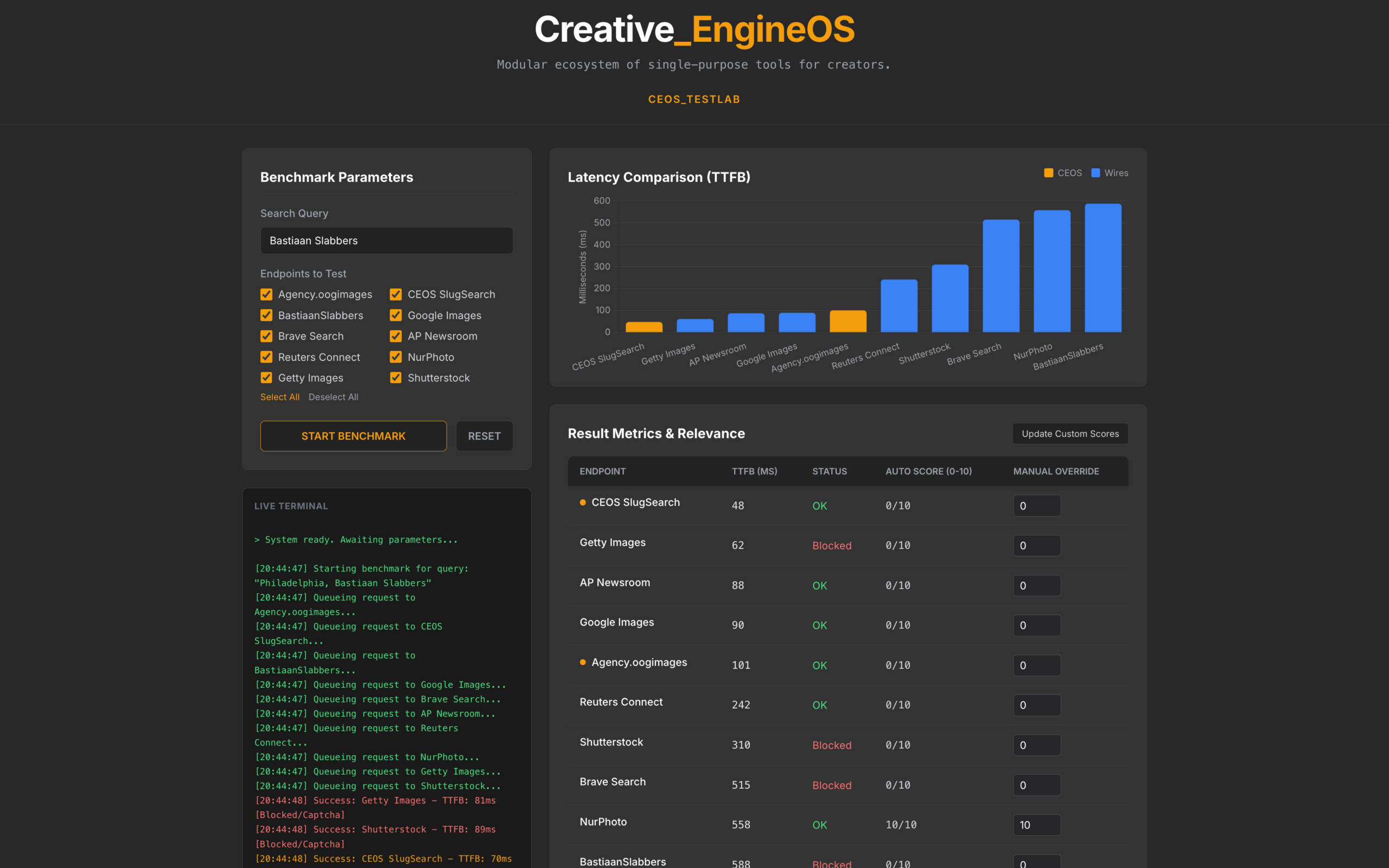
I wanted to know exactly how efficient this custom system was compared to the commercially available industry juggernauts. So, I decided to give the test a little more oomph. I built a lean, transparent benchmarking tool to pit my engines against the massive global photo wires in real-time.
Leave a Reply
You must be logged in to post a comment.